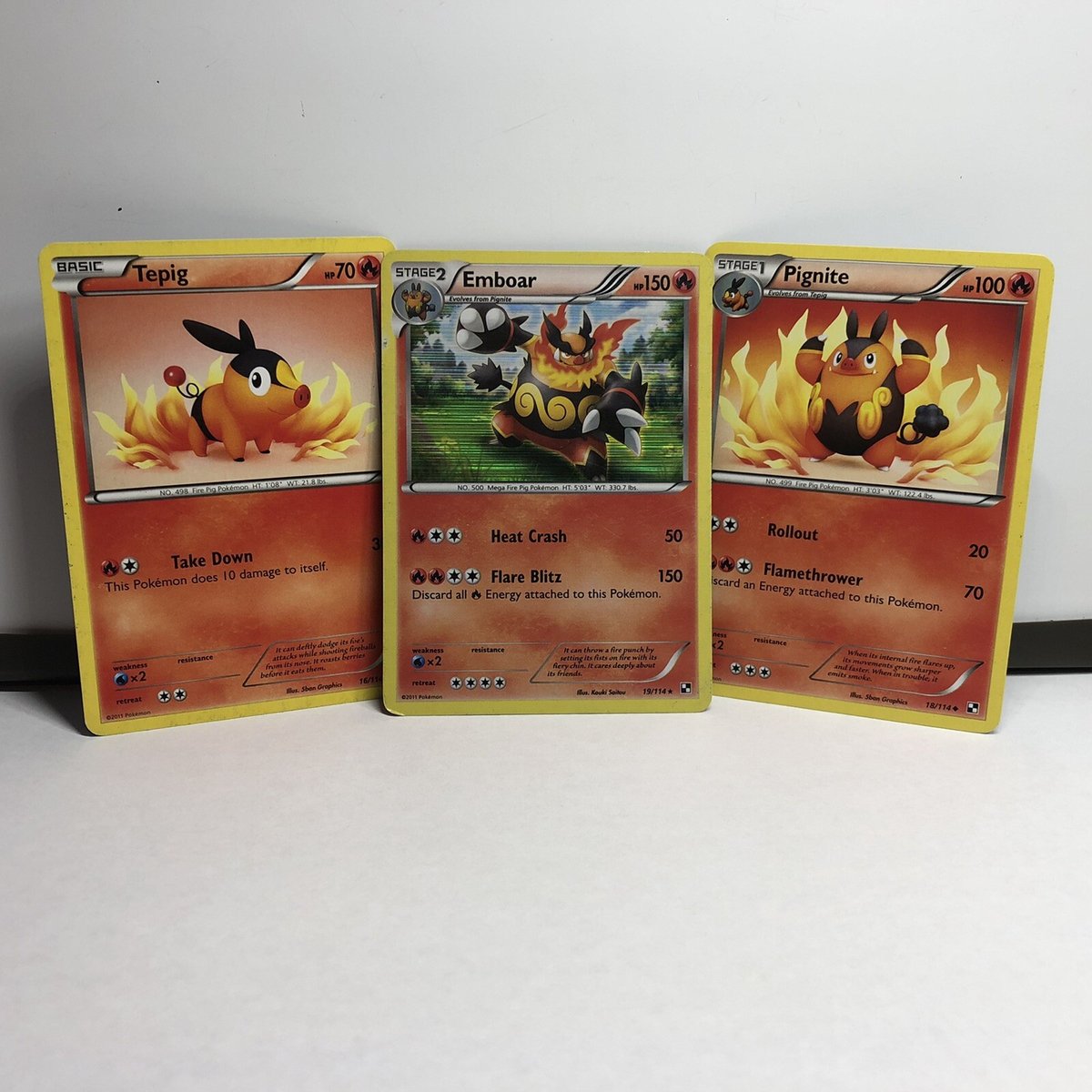
The Unova region introduced us to a fresh cast of Pokémon, and among them, a charming little Fire-type pig captured hearts and sparked debates. We're talking about the Tepig Evolution Line: Emboar, Abilities, and Battle Strategies—a journey that transforms a cute piglet into a formidable, fiery powerhouse. Whether you’re a long-time trainer or just starting your adventure, understanding this evolutionary line is key to harnessing its unique strengths.
Let's dive into everything you need to know about Tepig, Pignite, and the mighty Emboar.
At a Glance: Tepig's Essentials
- Type: Fire (Tepig), Fire/Fighting (Pignite & Emboar)
- Abilities: Blaze (standard), Thick Fat (hidden)
- Evolution: Tepig -> Pignite (Level 17) -> Emboar (Level 36)
- Key Strength: High HP and Attack (Emboar)
- Noteworthy: One of only three Fire/Fighting starter final evolutions.
- Weaknesses: Emboar's Fire/Fighting typing brings several common weaknesses.
- Strategic Advantage: Thick Fat significantly alters its defensive profile.
Tepig: The Little Fire Pig with Big Potential
Every great Pokémon journey starts somewhere, and for many Unova trainers, that journey begins with Tepig. This Fire Pig Pokémon, identified by National Pokédex number 0498, might appear unassuming at first glance, but beneath its adorable exterior lies the spirit of a true fighter.
Standing at a modest 0.5 meters (1'08") and weighing 9.9 kg (21.8 lbs), Tepig is known for its agility, capable of deftly dodging attacks and shooting fireballs from its nose—a skill it often uses to roast berries, sometimes a little too enthusiastically. According to Pokédex entries, when Tepig catches a cold, its flames turn into pitch-black smoke, a unique detail that adds to its character.
The Foundation: Understanding Tepig's Base Stats
Tepig’s base stats, totaling 308, lay the groundwork for its evolutionary path:
- HP: 65
- Attack: 63
- Defense: 45
- Special Attack: 45
- Special Defense: 45
- Speed: 45
These stats highlight a focus on HP and physical Attack even at its earliest stage. The relatively low defensive and Speed stats suggest that Tepig, and later Emboar, will rely on sheer power and HP to endure battles rather than nimble dodging or robust defenses.
Abilities That Define Tepig's Line: Blaze vs. Thick Fat
The choice of ability is crucial for any Pokémon, and for the Tepig line, it can dramatically alter battle performance. Tepig, Pignite, and Emboar all have access to two distinct abilities: Blaze and Thick Fat.
Blaze: The Classic Starter Ability
Blaze is the standard ability for all Fire-type starter Pokémon. When the Pokémon's HP drops to 1/3 or less of its maximum, the power of its Fire-type moves increases by 50%. This can be a game-changer, allowing your Pokémon to turn the tide in desperate situations, often delivering a powerful finishing blow that opponents might not expect.
With Blaze, Tepig (and its evolutions) takes:
- 1/2x damage from Fire, Grass, Ice, Bug, Steel, Fairy.
- 2x damage from Water, Ground, Rock.
- 1x damage from all other types.
Thick Fat: A Game-Changer for Survival
Thick Fat is Tepig’s hidden ability, and it's a strategic gem. This ability halves the damage taken from Fire-type and Ice-type attacks. For a Pokémon like Emboar, which is typically susceptible to common weaknesses, Thick Fat significantly enhances its survivability against two of its potential threats.
With Thick Fat, Tepig (and its evolutions) takes:
- 1/4x damage from Fire and Ice (huge!).
- 1/2x damage from Grass, Bug, Steel, Fairy.
- 2x damage from Water, Ground, Rock.
- 1x damage from all other types.
Notice the crucial difference: Ice-type attacks, which normally deal 1/2x damage to a Fire-type, now deal a mere 1/4x damage with Thick Fat. This makes matchups against common Ice-type attackers much more manageable. To truly optimize your team, you'll want to dive deeper into how abilities shape gameplay.
Strategic Choice: Which Ability is Right for Your Team?
- Blaze is ideal if you're looking for a last-ditch power surge and plan to aggressively use Fire-type moves. It rewards calculated risks and can surprise opponents.
- Thick Fat is generally considered superior for competitive play due to its defensive utility. It mitigates damage from two common offensive types (Fire and Ice), offering more setup opportunities or sustained presence on the field. Given Emboar's moderate Speed and defenses, reducing incoming damage is often more valuable than a conditional offensive boost.
Evolutionary Path: From Piglet to Powerhouse
The journey from Tepig to Emboar is straightforward, marked by two key evolutionary stages.
Pignite: The Evolving Fighter
At Level 17, Tepig evolves into Pignite, taking on the dual typing of Fire/Fighting. This evolution not only grants it a new set of resistances and weaknesses but also a significant boost to its base stats. Pignite’s design embodies its new fighting spirit, preparing it for the might it will soon achieve. It effectively bridges the gap, allowing you to sample its dual-type advantages before the final evolution.
Emboar: Unleashing the Fiery Fighting Powerhouse
The final form, Emboar, is reached at Level 36. Emboar maintains the Fire/Fighting typing, but its stats undergo a dramatic transformation, cementing its role as a powerful offensive force. To get a better grasp of how Emboar fits into the grand scheme of its generation's starters, you can Explore Fifth Generation Starters.
Emboar: Unleashing the Fiery Fighting Powerhouse
Emboar stands as a testament to raw power and bulk. As a Fire/Fighting-type, it brings a unique offensive presence to any team, capable of dishing out massive damage. However, its specific stat distribution and type vulnerabilities mean it requires careful strategic planning to shine.
Emboar's Core: Stats and Role in Battle
Upon evolving, Emboar's base stats become:
- HP: 110
- Attack: 123
- Defense: 65
- Special Attack: 100
- Special Defense: 65
- Speed: 65
- Total: 528
These numbers immediately tell a story: Emboar is designed to be a bulky physical attacker. Its massive 110 HP allows it to take a few hits, especially with Thick Fat, while its 123 Attack stat enables it to hit incredibly hard with moves like Flare Blitz and Superpower. The 100 Special Attack is also respectable, allowing for mixed sets, but its physical prowess is where it truly excels. The low 65 Speed, however, is a major drawback, meaning Emboar will almost always move last against offensive threats.
Type Advantage & Vulnerabilities
Emboar's Fire/Fighting typing is offensively potent, hitting a wide range of types for super-effective damage. However, it also comes with several key weaknesses:
Resistances (1/2x or 1/4x damage):
- 1/4x: Bug, Grass (with Thick Fat, Ice becomes 1/4x)
- 1/2x: Dark, Fire, Ice (Blaze), Steel, Grass (Blaze)
Weaknesses (2x or 4x damage): - 2x: Flying, Ground, Water, Psychic
The 4x weakness to Flying-type attacks is a significant concern, making opponents with access to Brave Bird, Acrobatics, or Dual Wingbeat particularly dangerous. Ground, Water, and Psychic attacks are also common and pose substantial threats. This makes strategic switching and careful positioning vital when using Emboar.
Signature Moves & Key Learnset
Emboar has access to a diverse move pool, allowing for various offensive strategies.
Key Level-Up Moves:
- Ember/Flamethrower/Flare Blitz: Your primary Fire-type STAB (Same-Type Attack Bonus) moves. Flare Blitz is incredibly powerful but comes with significant recoil.
- Arm Thrust/Heat Crash/Hammer Arm: Your Fighting-type STAB options. Hammer Arm is strong but reduces Speed, which is already a weakness.
- Take Down/Head Smash: Powerful physical moves, but Head Smash has recoil and poor accuracy.
Important TM/TR Moves: - Fire Blast/Overheat: Strong Special Fire moves if you opt for a mixed set.
- Will-O-Wisp: Can cripple physical attackers by burning them, reducing their Attack.
- Wild Charge: Coverage against Water and Flying types, though it has recoil.
- Earthquake: Crucial coverage against Rock, Electric, and other Fire-types.
- Stone Edge/Rock Slide: Coverage against Flying types, though accuracy can be an issue for Stone Edge.
- Superpower: Extremely powerful Fighting STAB, but lowers Attack and Defense by one stage each.
- Focus Blast: Powerful Special Fighting STAB, but notoriously inaccurate.
- Swords Dance/Bulk Up: Setup moves to boost Emboar's Attack (and Defense for Bulk Up).
Useful Egg Moves: - Sucker Punch: A priority move that strikes if the opponent uses an attacking move, great for patching up Emboar's low Speed.
- Superpower: Can be learned as an Egg Move, giving you an early powerful option.
- Yawn: A status move that can force switches or put opponents to sleep.
Building Your Emboar: Strategic Battle Sets
Emboar excels as an offensive wallbreaker. Here are a few common strategies:
1. The All-Out Attacker (Choice Band/Scarf)
- Ability: Thick Fat
- Item: Choice Band (maximize damage) or Choice Scarf (compensate for low Speed, though risky)
- Nature: Adamant (+Attack, -Special Attack)
- EVs: 252 Attack, 252 HP, 4 Defense
- Moves:
- Flare Blitz (STAB, massive damage)
- Superpower (STAB, incredible power, manage stat drops)
- Wild Charge (Coverage against Water/Flying)
- Earthquake / Stone Edge / Sucker Punch (More coverage/priority)
This set aims to hit as hard as possible. Choice Band Emboar is a devastating force, but locking into one move can be exploited. Choice Scarf Emboar aims to outspeed unexpected threats and can surprise slower opponents, but its raw power is slightly diminished without Choice Band. For understanding core competitive mechanics, item choices like these are fundamental.
2. Bulky Attacker (Assault Vest/Leftovers)
- Ability: Thick Fat
- Item: Assault Vest (boosts Special Defense) or Leftovers (passive recovery)
- Nature: Adamant
- EVs: 252 HP, 252 Attack, 4 Special Defense
- Moves:
- Flare Blitz
- Drain Punch (recovers HP, less recoil than Flare Blitz)
- Wild Charge / Earthquake
- Sucker Punch (priority)
The Assault Vest set significantly improves Emboar's Special Defense, allowing it to take hits from special attackers more effectively, especially with Thick Fat mitigating Fire and Ice damage. Leftovers offers sustain. Drain Punch is a fantastic move here, providing recovery to offset Flare Blitz recoil or simply heal up.
3. Setup Sweeper (Swords Dance/Bulk Up)
- Ability: Thick Fat
- Item: Life Orb (boosts damage, recoil) or Leftovers (sustain)
- Nature: Adamant
- EVs: 252 HP, 252 Attack, 4 Defense
- Moves:
- Swords Dance / Bulk Up (setup move)
- Flare Blitz
- Superpower / Drain Punch
- Sucker Punch / Wild Charge
If given a free turn to set up, Emboar can become an unstoppable force. Swords Dance doubles its already impressive Attack, while Bulk Up boosts both Attack and Defense, making it harder to take down. This set often requires careful team support to create the opening for Emboar to boost.
Team Synergy: Who Works Well with Emboar?
Emboar thrives with partners who can cover its weaknesses and set it up for success:
- Defensive Core: Pokémon resistant to Water, Ground, and Psychic types (e.g., Grass-types, Flying-types, Steel-types with Levitate) can switch in on attacks aimed at Emboar.
- Hazard Setters: Stealth Rock and Spikes can wear down opponents, making it easier for Emboar to secure KOs.
- Speed Control: Tailwind or Sticky Web support can help Emboar overcome its low Speed, allowing it to move first.
- Entry Hazard Removal: Emboar doesn't like switching into Stealth Rock, so a Pokémon with Rapid Spin or Defog is valuable.
Remember, building a cohesive team involves balancing types and roles, considering your Emboar's specific role as a wallbreaker. You might also want to explore other formidable Fire-type Pokémon to see how Emboar stacks up.
Training & Raising Your Tepig Line
Understanding the mechanics of training and breeding is crucial for maximizing your Pokémon's potential.
EV Yield & Growth: Shaping Your Pokémon's Power
- EV Yield: When you defeat a Tepig in battle, your Pokémon gains 1 HP EV (Effort Value). This means Tepig contributes to building your Pokémon's HP stat. As Pignite and Emboar are defeated, they yield EVs in different stats, typically favoring Attack and HP.
- Growth Rate: Tepig belongs to the Medium Slow growth rate group, meaning it requires a moderate amount of experience to level up. This is a common growth rate, so training it won't feel excessively slow or fast. To master the art of EV training, consider how these individual yields contribute to a Pokémon's overall stats.
Breeding Basics: Egg Group, Gender Ratio, Hatch Cycles
- Egg Group: Tepig is part of the Field Egg Group. This is one of the largest and most diverse egg groups, meaning Tepig can breed with a wide variety of non-legendary Pokémon like Growlithe, Eevee, and Herdier, allowing for easy access to Egg Moves.
- Gender Ratio: Tepig has a predominant 87.5% male to 12.5% female gender ratio. This is typical for starter Pokémon. While it doesn't impact battle performance, a female Tepig can be slightly rarer to obtain.
- Hatch Cycles: Tepig eggs hatch in approximately 20 cycles (4,884–5,140 steps). This is a standard amount of time for a starter Pokémon, so expect a reasonable wait if you're trying to breed for specific IVs or Egg Moves.
Catching & Friendship: Getting Started
- Catch Rate: Tepig has a catch rate of 45 (5.9%), making it a moderately challenging Pokémon to catch, but not overly difficult, especially if you use status conditions and weaker Poké Balls.
- Base Friendship: Historically, Tepig's base friendship value was 70 in Generations 5-7, then adjusted to 50. A higher base friendship means it will warm up to you faster, which can be beneficial for certain friendship-based evolutions or moves, though not directly for Tepig's line.
Where to Find Tepig (And How to Get It Elsewhere)
Finding a Tepig depends heavily on the game you're playing. As a starter Pokémon, its availability is usually tied to specific regions.
- Generation 5 (Unova):
- Black/White: Received as a starter Pokémon in Nuvema Town.
- Black 2/White 2: Received as a starter Pokémon in Aspertia City.
- Generation 6 (Kalos/Hoenn Remakes):
- Omega Ruby/Alpha Sapphire: Found on Route 101 after completing the main story and talking to Professor Birch. This is a unique opportunity to obtain a regional starter in another game.
- Other Games (Sun/Moon, Ultra Sun/Ultra Moon, Scarlet/Violet - The Indigo Disk):
- In these games, Tepig is generally not found in the wild. You'll typically need to obtain it by breeding its evolutions (Pignite or Emboar) or through trading with other players who have access to it from compatible games.
- Legends: Z-A: Tepig (along with other Unova starters) has been confirmed for Pokémon Legends: Z-A, hinting at its potential return as a starter or early-game encounter in that title.
- The Indigo Disk (Scarlet/Violet DLC): Tepig is listed with local number 0203, implying it's available within the Terarium of the Blueberry Academy.
Not Available In:
Tepig is notably absent from games like Let's Go Pikachu/Eevee, Sword/Shield, Brilliant Diamond/Shining Pearl, and Legends: Arceus, meaning you cannot transfer or catch it in those titles.
Behind the Name: Tepig's Lore and Origins
Every Pokémon has a story, and Tepig is no exception. Its design and name are rich with cultural and linguistic influences.
Pokédex Entries: Insights into Tepig's Personality
- Black/White: "It can deftly dodge its foe's attacks while shooting fireballs from its nose. It roasts berries before it eats them."
- Black 2/White 2: "It loves to eat roasted berries, but sometimes it gets too excited and burns them to a crisp. It shoots fireballs from its nose."
These entries paint a picture of a lively, perhaps a bit clumsy, Pokémon with a strong affinity for its Fire typing. The detail about burning berries adds a touch of endearing imperfection.
Etymology & International Names
- English Name: Tepig - Derived from "tepid" (lukewarm, referring to its initial stage of fire) and "pig" (its animal basis).
- Japanese Name: ポカブ (Pokabu) - Likely from ポカポカ (pokapoka, "warm") and 豚 (buta, "pig").
- German Name: Floink - Perhaps from "Flamme" (flame) or "flinker" (nimbler) and "Schwein" (pig).
- French Name: Gruikui - "Gruik" is an onomatopoeia for a pig's oink, and "cuit" means cooked, again referencing its Fire type and roasting habits.
Its species name, "Fire Pig Pokémon," is consistent across languages, reflecting its core identity.
Common Questions & Misconceptions About Emboar
Let's clear up some common thoughts and questions trainers have about Emboar.
Is Emboar a good starter?
Yes, Emboar is absolutely a good starter, especially for players who enjoy an offensive playstyle. It offers powerful Fire and Fighting STAB attacks early on and has the bulk to take hits. Its challenges (low Speed, common weaknesses) teach valuable lessons in team composition and strategic switching.
Why isn't Emboar faster?
Emboar's relatively low Speed (base 65) is a design choice that differentiates it from other starters and Fire/Fighting types. Not every Pokémon can be fast. Emboar's strengths lie in its high HP and Attack, forcing trainers to work around its Speed rather than relying on it. This makes it a "slow but powerful" attacker, a distinct niche.
How does Emboar compare to other Fire/Fighting starters?
Emboar is one of three Fire/Fighting final evolutions, alongside Blaziken and Infernape.
- Blaziken is known for its high Attack and Speed, often utilizing Speed Boost to become a dangerous sweeper.
- Infernape is a mixed attacker with great Speed, offering flexibility.
- Emboar distinguishes itself with its significantly higher HP and raw Attack, making it a bulkier, slower wallbreaker. Its hidden ability, Thick Fat, also gives it a defensive edge the others lack. Each has its own strengths and weaknesses, fitting different team roles.
Is Thick Fat always better than Blaze?
For competitive battles and overall utility, Thick Fat is generally considered superior to Blaze. The ability to halve damage from Fire and Ice attacks is a powerful defensive utility that significantly improves Emboar's matchups and survivability, especially against common Ice-type moves that would normally threaten it. Blaze is situational, only activating at low HP, whereas Thick Fat is always active and provides consistent defensive benefits.
Mastering the Emboar Line: Your Next Steps
The Tepig evolution line culminates in Emboar, a powerful Fire/Fighting-type Pokémon that rewards strategic planning and a keen understanding of its strengths and weaknesses. By leveraging its high HP and Attack, choosing the right ability (Thick Fat often being the prime choice), and selecting a diverse move pool, Emboar can break through defensive walls and put immense pressure on your opponents.
Remember to build a team that supports Emboar, covering its Flying, Ground, Water, and Psychic weaknesses, and you'll find this fiery pig an invaluable asset. So go forth, trainer, and unleash the might of Emboar! Your journey with this loyal, powerful Pokémon is just beginning.